
Types of Rollers and Their Applications in Conveyor Belts
Conveyor belts are one of the most important pieces of equipment in various industries such as mining, steel, food and pharmaceutical industries. The moving parts of these systems are vital for load transfer and smooth belt movement and play an important role in increasing the efficiency and lifespan of the system. One of these parts is the rollers, which act as rotation axes to guide and support the belt. Understanding the types of rollers and the application of each of them has a direct role in the design and proper operation of production lines and can increase productivity, reduce maintenance costs and prevent sudden stops of production lines.
1. Rollers Based on Appearance
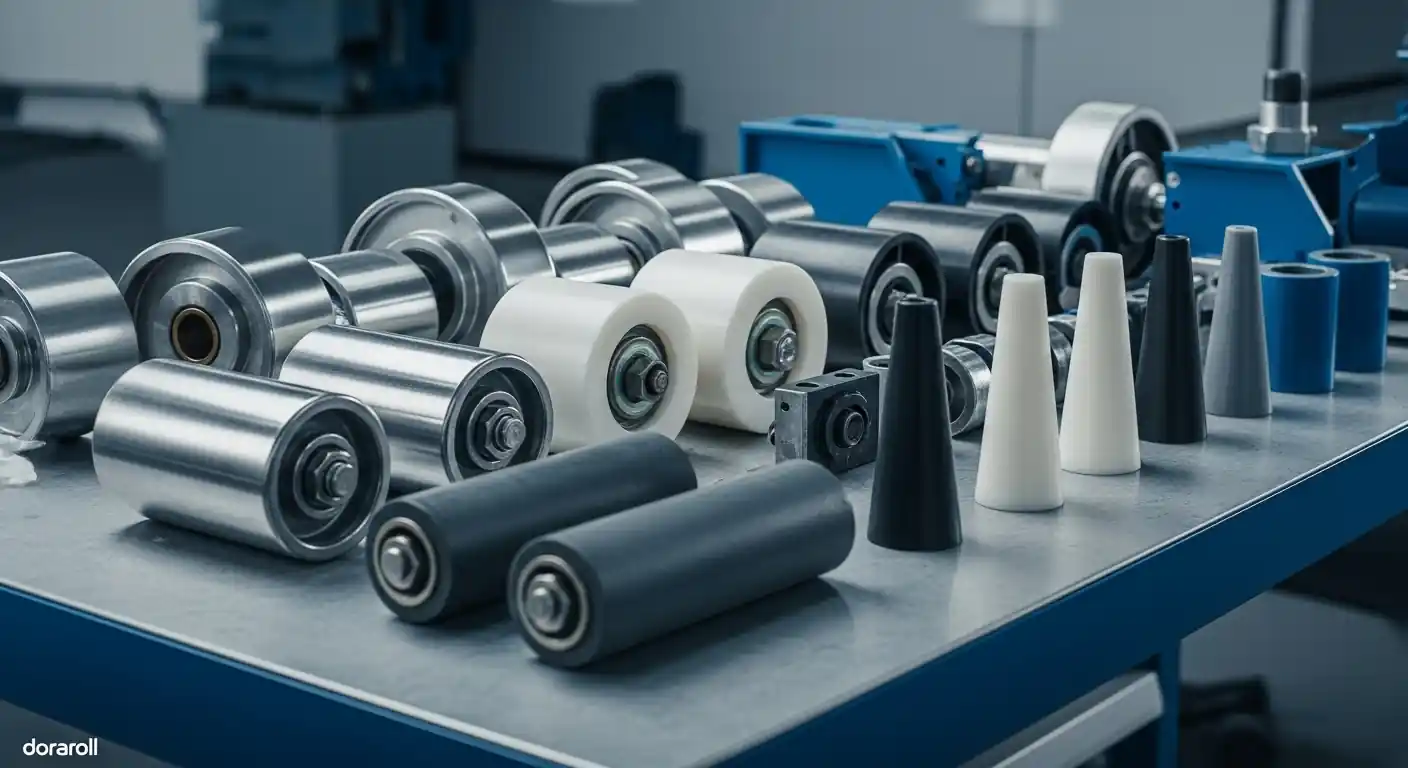
▪ Cylindrical Rollers
These rollers are the most common type and are usually used in straight conveyor paths. Their cylindrical shape allows the belt to move without deflection and reduces friction. Cylindrical rollers can be made of steel, stainless steel or durable plastic. In heavy industries such as mining and steel, steel or stainless steel is usually used because it can withstand heavy loads and sudden impacts.
▪ Conical Rollers
These types of rollers are installed on curved paths or parts where the conveyor changes direction. Their conical shape allows the belt to stay perfectly in place when passing through turns or deviations and prevents deflection or twisting. Conical rollers are usually installed at precise intervals to maintain load balance and reduce stress on the conveyor.
▪ Grooved Rollers
These rollers have grooves that stabilize the belt or strap in its path. Grooves can play an effective role in preventing the load or belt from slipping and are very useful in high-speed lines or unbalanced loads.
2. Rollers by Installation Location
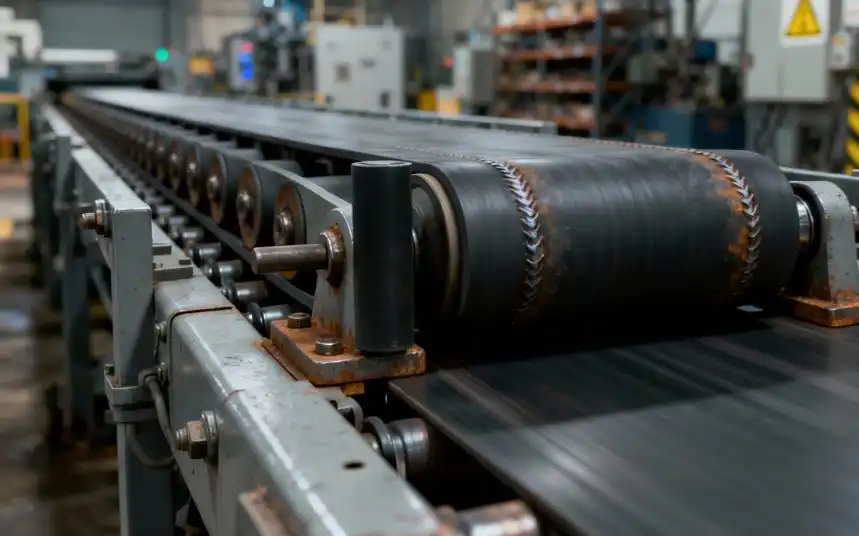
▪ Drive Rollers
These rollers are installed at the top of the belt and are responsible for guiding the belt and the load. They reduce friction and stabilize the movement of the belt, ensuring smooth and uniform movement of the load.
▪ Return Rollers
They are installed at the bottom of the conveyor and guide the return path of the belt. These rollers are usually lighter than drive rollers and their focus is on maintaining the belt and reducing slippage.
▪ Guide Rollers
These rollers are installed on the sides and are responsible for preventing belt deviation. In lines with heavy or unstable loads, the use of guide rollers is essential.
3. Rollers by Material
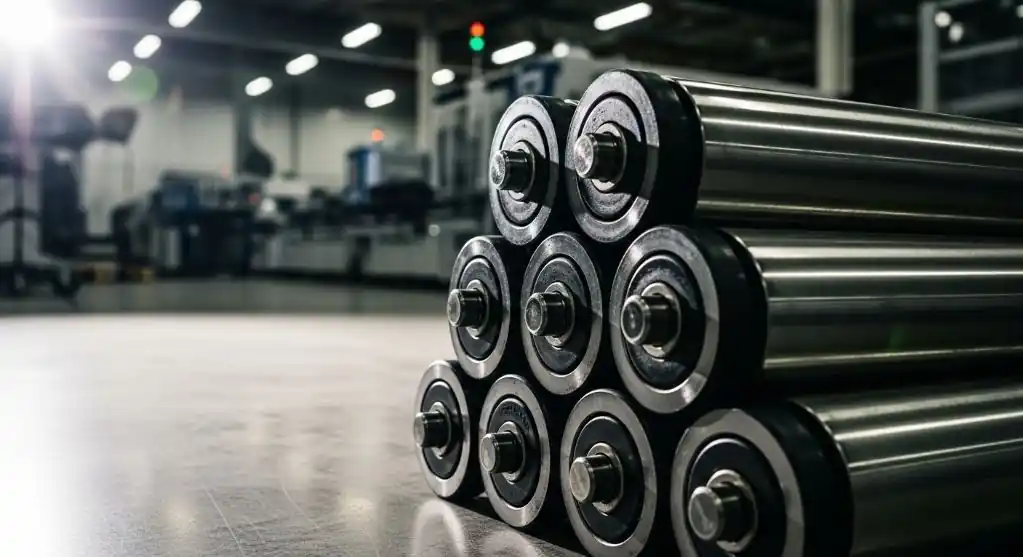
▪ Metal Rollers
Suitable for heavy industries such as mining, steel, and cement. These rollers are usually made of durable steel and can withstand heavy loads and sudden impacts.
▪ Steel Rollers
These rollers are resistant to moisture and rust and are suitable for humid or chemical environments.
▪ Plastic or Polyethylene Rollers
Lightweight and corrosion resistant, they are commonly used in food, pharmaceutical, and petrochemical industries.
▪ Rubber-Coated Rollers
They have a rubber-coated surface to absorb impacts from the load and prevent damage to the belt.
Important Points in Choosing Rollers
The correct selection of rollers requires attention to several key factors: load weight, belt speed, environmental conditions, installation intervals, and periodic maintenance.
The Importance of Periodic Maintenance and Inspection
Periodic maintenance of rollers plays a key role in extending the life of the conveyor belt. Replacing damaged rollers, proper lubrication, and monitoring bearings can prevent sudden stops in production lines.
Conclusion
Rollers are a vital part of the conveyor belt, and knowing their types, the right material, and the installation location directly affects the performance of the system. Choosing the right roller, periodic maintenance, and following technical tips will increase the life of the system and reduce operating costs.