
Types of Bearing Housings: Definitions, Features, and Applications
Bearing housings are essential components used to support bearings, protect them from contaminants, and maintain correct alignment under varying loads. Choosing the right housing type ensures longer bearing life, reduced maintenance, and reliable operation of machinery such as conveyors, electric motors, and processing equipment. This guide explains the main types of bearing housings, their characteristics, and key selection criteria.
1. Plummer Block (Pillow Block) Housings
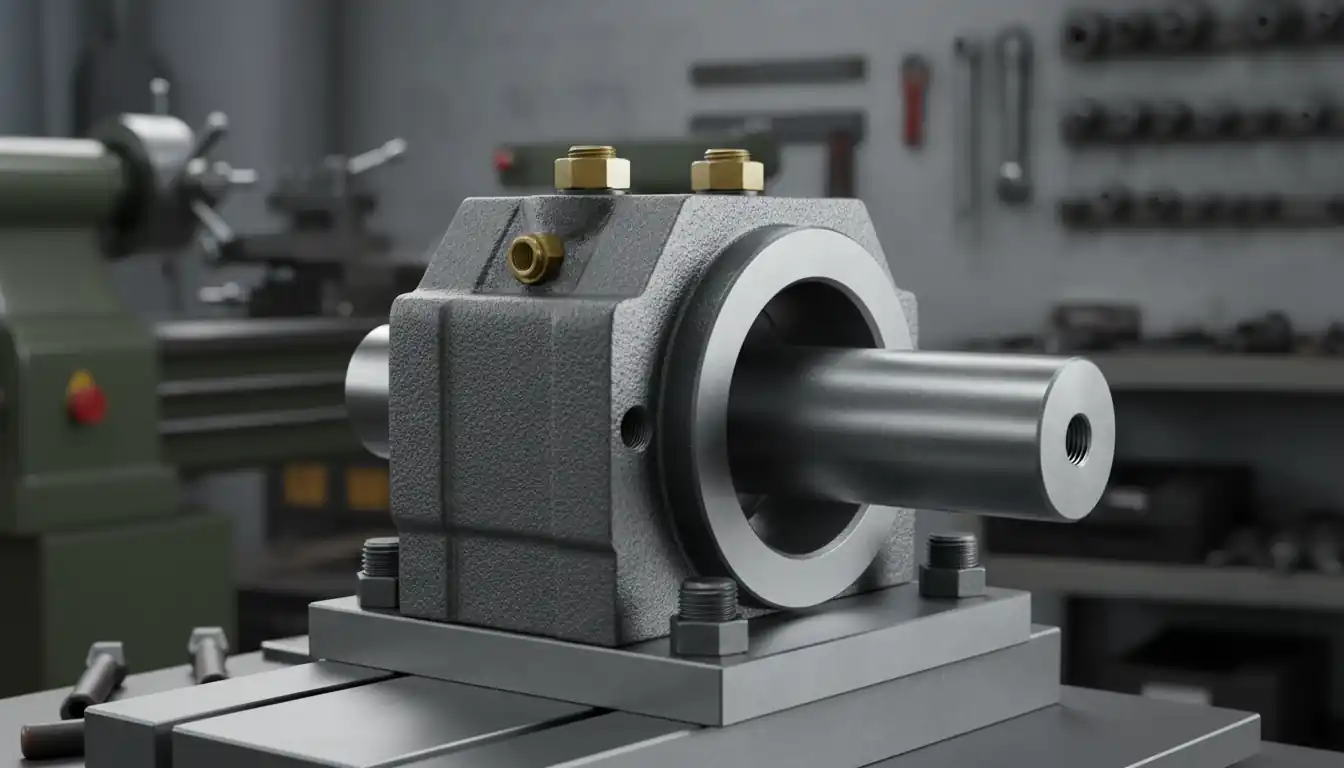
Plummer block or pillow block housings are among the most commonly used bearing housings. They typically consist of a solid or split cast-iron body designed to house a bearing unit. These housings simplify maintenance, provide robust support, and often include grease fittings for easy lubrication.
- Material: Cast iron or cast steel
- Applications: Conveyor rollers, pumps, fans, and agricultural equipment
- Advantages: High rigidity, easy installation, and good load capacity
2. Flanged Bearing Housings
Flanged housings feature a flange base that allows them to be mounted on vertical or horizontal surfaces. They are ideal when the shaft passes through a wall or frame.
- Types: Square (four-bolt), round (three-bolt), and two-bolt configurations
- Applications: Fans, packaging machines, conveyor ends
- Advantages: Compact design and precise shaft positioning
3. Take-Up Bearing Housings
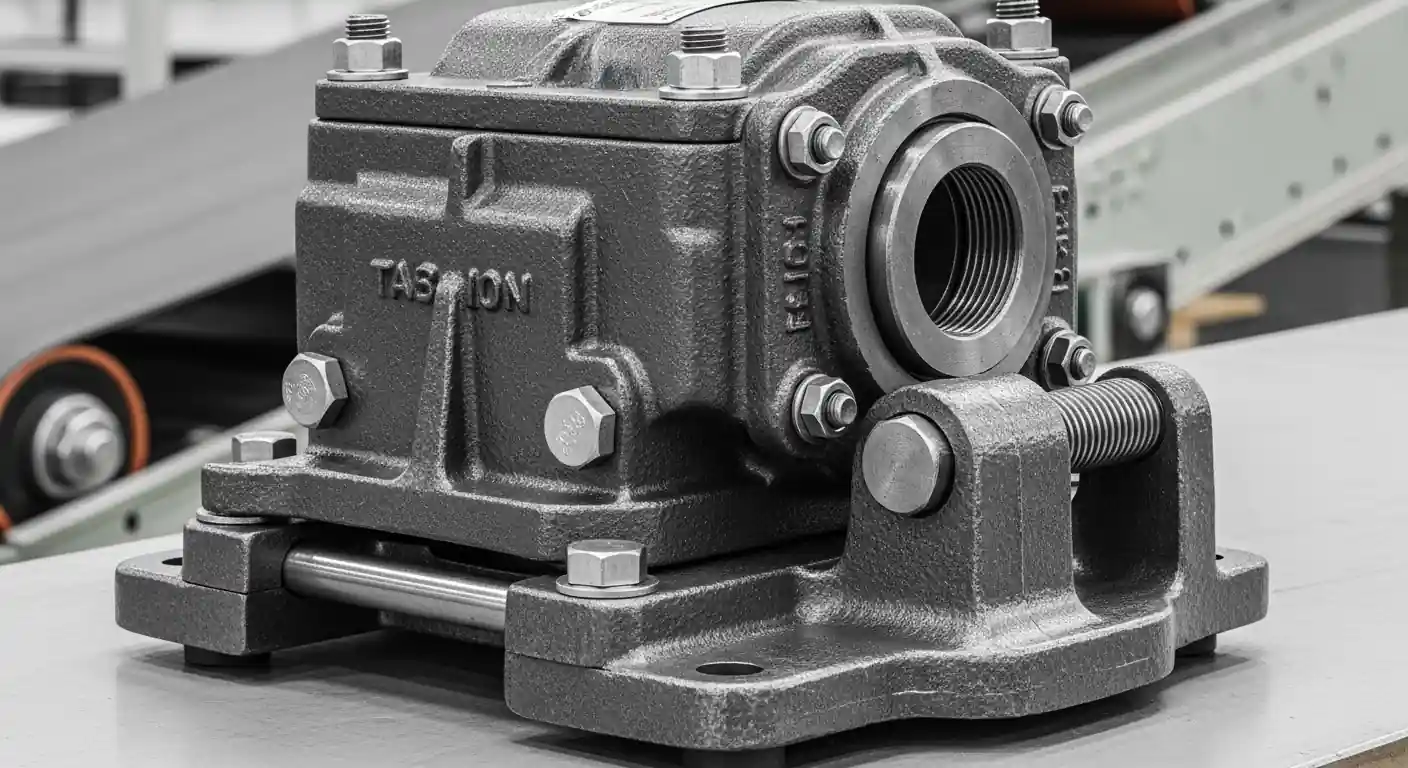
Take-up housings are designed for conveyor systems where the bearing position must be adjustable to maintain proper belt tension. The housing slides along a guide rail or is adjusted with a screw mechanism.
- Applications: Belt and chain conveyors, tensioning systems
- Advantages: Simplifies alignment and belt tension adjustment
4. Cartridge Bearing Housings
Cartridge housings enclose the bearing completely in a cylindrical shell, offering superior protection from dust and moisture. They are ideal for harsh industrial environments.
- Material: Cast steel or ductile iron with integrated seals
- Applications: Mining, bulk handling, and heavy-duty conveyors
- Advantages: High sealing efficiency and reduced maintenance
5. Split Bearing Housings
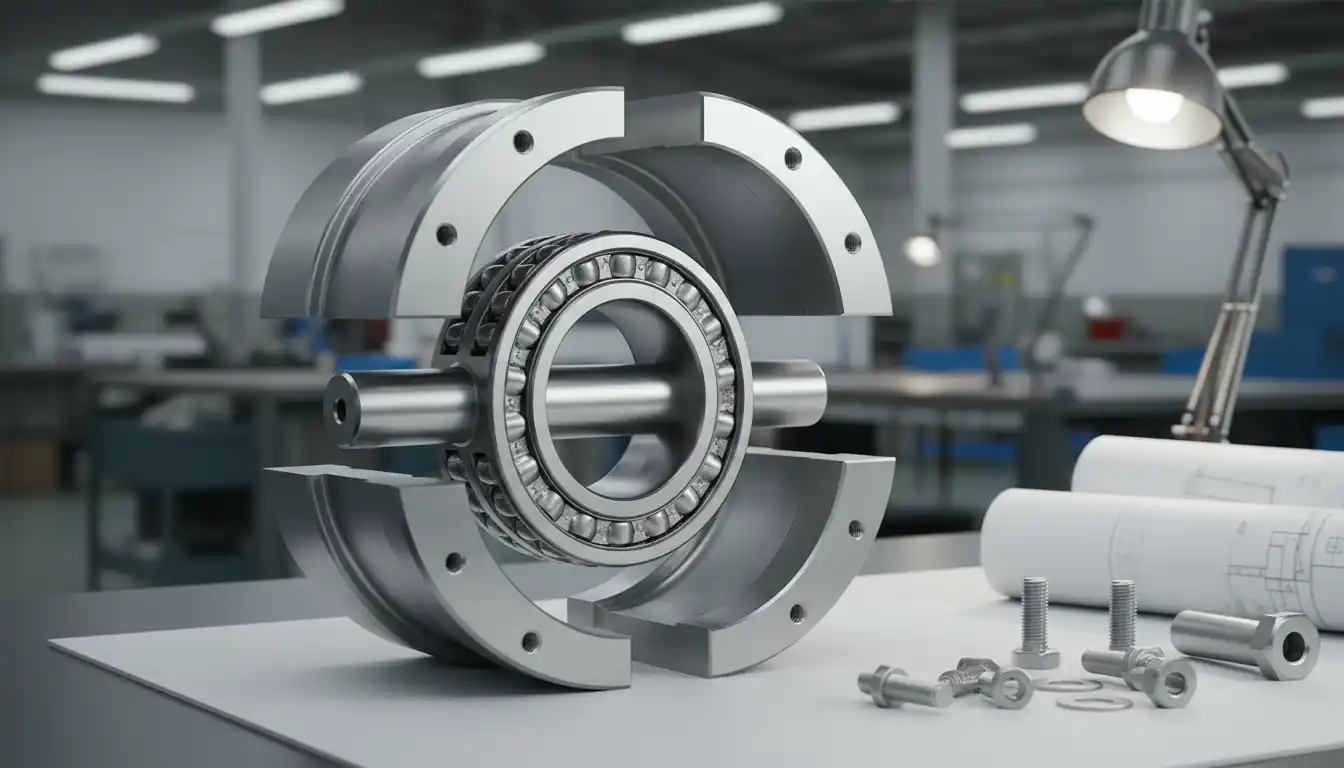
Split bearing housings are made of two separate halves, allowing easy installation and removal of bearings without dismantling connected components. They are commonly used for large shafts and heavy-duty applications.
- Applications: Steel mills, turbines, crushers
- Advantages: Simplified maintenance and bearing replacement
6. Special Bearing Housings
Special housings are customized for unique operating conditions such as extreme temperatures, corrosive environments, or hygienic industries. They may be made from stainless steel, thermoplastic, or aluminum.
- Examples: Stainless steel housings for food processing, thermoplastic housings for clean environments, and heavy-duty housings for mining
7. Technical Considerations When Selecting a Bearing Housing
| Parameter | Technical Importance |
|---|---|
| Load Capacity | Ensures support for radial and axial forces |
| Operating Speed | Affects heat generation and lubrication |
| Sealing System | Protects bearings from dust and moisture |
| Material | Determines strength and corrosion resistance |
| Alignment Tolerance | Prevents premature bearing wear |
Conclusion
Choosing the right bearing housing is crucial for optimal machine reliability and reduced downtime. Each housing type—whether plummer block, flanged, take-up, cartridge, or split—offers unique advantages for specific industrial applications. By understanding their differences and matching the design to your system’s load, speed, and environment, you ensure a long-lasting, efficient setup.