
Guide to Choosing the Right Conveyors
Selecting the right conveyor system is one of the most important decisions in any material handling or industrial process. The right conveyor improves efficiency, ensures safety, and reduces operating costs. Whether for sand and gravel plants, asphalt production, manufacturing, or logistics, the choice of conveyor determines productivity and long-term performance.
Understanding Conveyor Systems
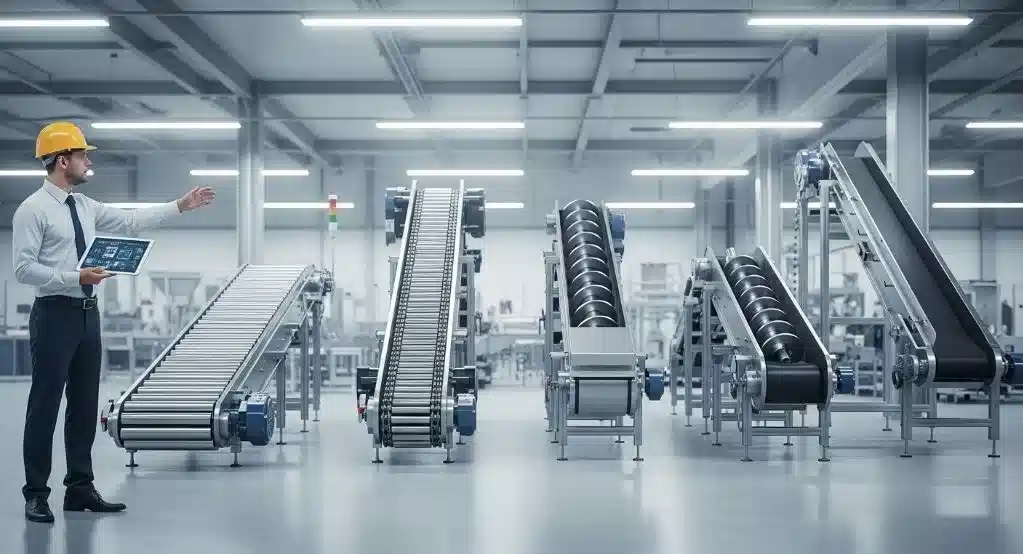
A conveyor is a mechanical system that continuously moves materials from one location to another. Depending on design and purpose, it may use belts, rollers, chains, or screws. Modern conveyor systems are designed for efficiency, automation, and safety in transporting everything from powders to heavy aggregates.
Main Types of Conveyors
1. Belt Conveyors
The belt conveyor is the most common type, suitable for light and heavy materials. It consists of a continuous belt driven by pulleys. Belt conveyors are ideal for long-distance material transport and are widely used in quarrying, asphalt production, agriculture, and packaging.
2. Roller Conveyors
Roller conveyors use rollers to move goods by gravity or powered drives. They are excellent for handling boxes, crates, or pallets. These conveyors are common in warehouses and assembly lines due to their modular structure and simple maintenance.
3. Screw Conveyors
A screw conveyor moves materials using a rotating helical blade inside a tube. It is fully enclosed and dust-free, making it suitable for fine powders and small particles. Typical uses include cement, asphalt, and food processing plants.
4. Chain Conveyors
Chain conveyors employ heavy-duty chains to carry products. These systems are durable, can handle high temperatures and heavy loads, and are ideal for automotive, steel, and foundry industries.
5. Bucket Elevators
Designed for vertical transport, bucket elevators lift bulk materials such as sand, grain, or aggregates. They save floor space and ensure continuous, clean vertical movement.
Key Factors in Conveyor Selection
1. Material Type
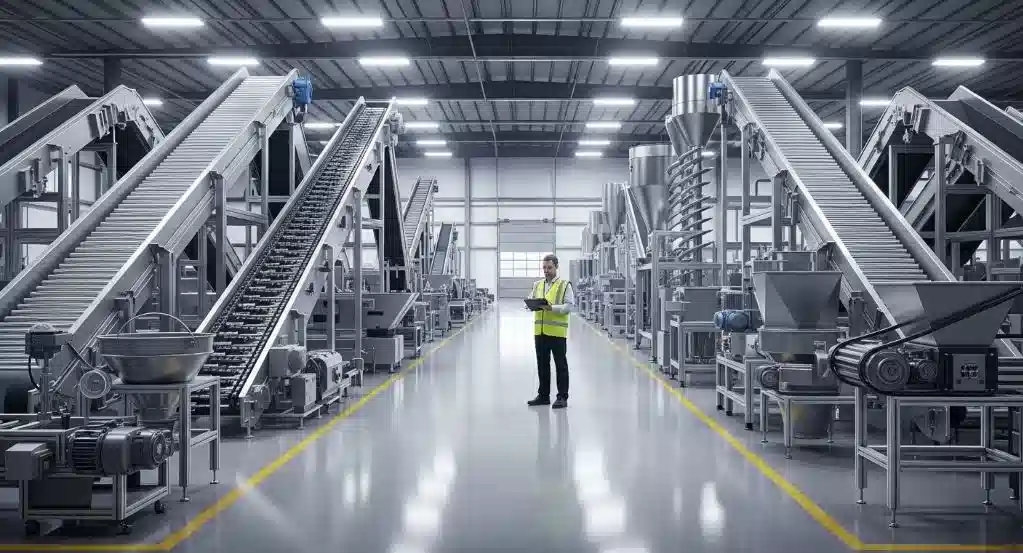
Analyze your material’s size, weight, moisture, and abrasiveness. Fine or dusty materials are best handled with screw or enclosed belt conveyors, while sharp or heavy materials require reinforced belt or chain systems.
2. Capacity and Speed
Determine the required throughput in tons per hour (TPH). The conveyor’s belt width and motor power should match your maximum production rate to prevent overloading and wear.
3. Layout and Distance
Consider plant layout, conveyor length, and transfer points. For long distances or inclines, tensioning systems or intermediate drives may be needed.
4. Environmental Conditions
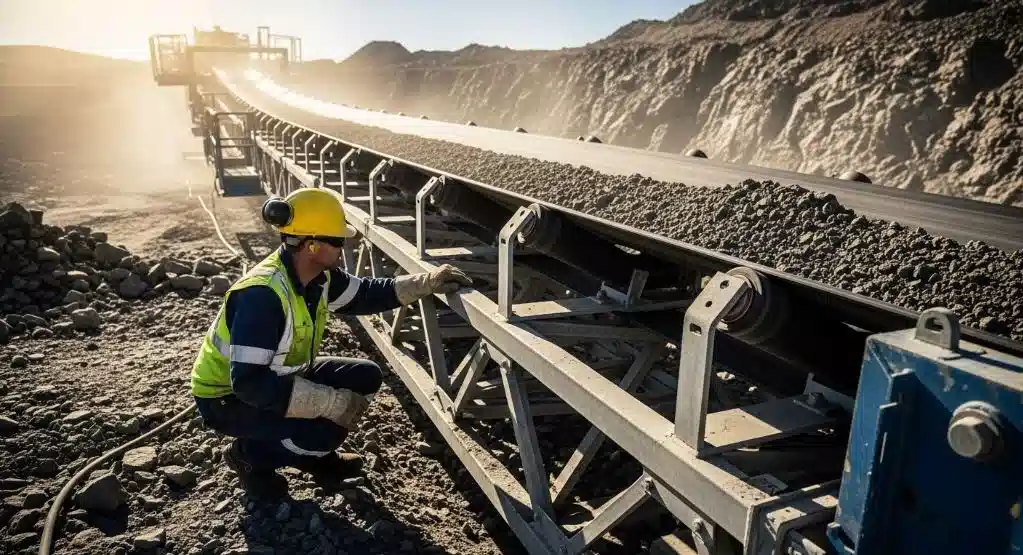
Temperature, dust, and humidity affect conveyor design. Outdoor conveyors should use galvanized or stainless steel frames and IP-rated motors to resist corrosion.
5. Maintenance and Energy Efficiency
Select systems with easy belt access, automatic lubrication, and energy-saving motors. Efficient maintenance reduces downtime and operating costs.
Technical Specifications Checklist
- Belt width: defines capacity and load stability.
- Belt speed: affects material flow and wear rate.
- Motor power: must match slope and load.
- Frame material: steel, stainless steel, or aluminum.
- Pulley and roller diameter: impacts tension and belt life.
- Safety features: guards, sensors, and emergency stops.
Conveyor Safety and Standards
All conveyors must meet international and local safety standards such as ISO 5048 or CEMA. Regular inspection, proper guarding, and operator training prevent accidents and downtime. Emergency stop systems should be easily accessible along the entire conveyor length.
Automation and Smart Conveyor Technology
Modern conveyors integrate with industrial automation systems. Sensors, variable frequency drives (VFDs), and IoT monitoring allow real-time tracking of speed, load, and temperature. These innovations support predictive maintenance and improve energy efficiency in smart factories.
Cost and Efficiency Considerations
When comparing systems, consider the total cost of ownership — including installation, power consumption, maintenance, and spare parts. A slightly higher investment in quality conveyors often results in greater reliability and lower lifetime costs.
Conclusion
The right conveyor system ensures maximum productivity, safety, and profitability. By analyzing material characteristics, capacity, layout, and working conditions, you can select a conveyor that performs efficiently for years. Whether for bulk materials, asphalt, or manufacturing processes, choosing the correct conveyor is key to smooth and cost-effective operation.