
Factors Affecting the Lifespan of Conveyor Systems
Conveyor systems are vital components in industries such as manufacturing, mining, logistics, and food processing. They enhance productivity, ensure safety, and streamline material handling. However, every conveyor has a limited service life — determined by design, maintenance, operating conditions, and component quality. Understanding these factors helps reduce downtime and extend system longevity.
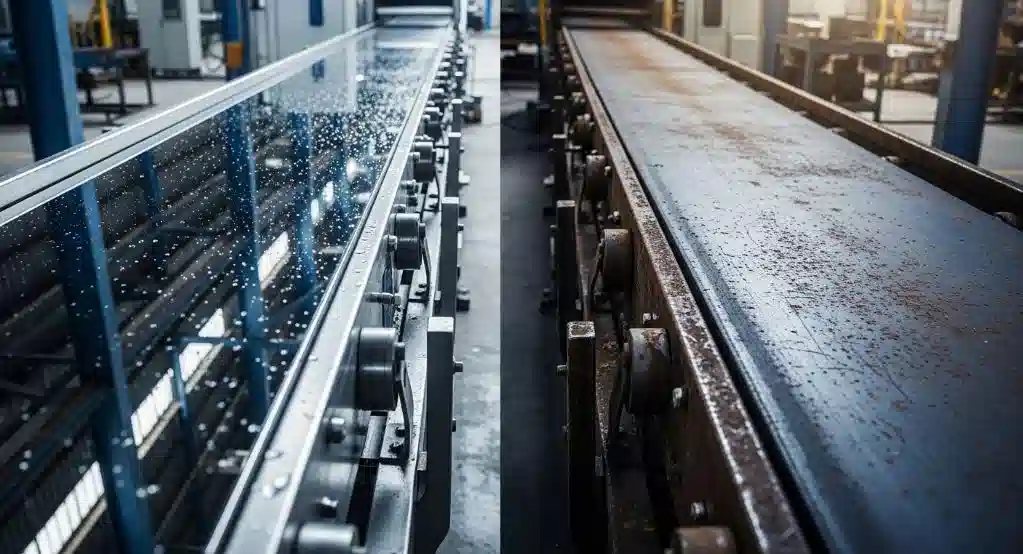
1. Conveyor Design and Material Quality
The foundation of any reliable conveyor lies in its design and construction materials. Frames made from stainless or hardened steel resist corrosion and mechanical stress, while the right belt or chain selection minimizes wear. Custom-designed systems tailored to the application perform better and last longer.
- Strong, rigid frame and supports
- High-quality bearings and pulleys
- Corrosion-resistant finishes for harsh environments
- Proper belt or chain selection based on material type
2. Operating Conditions
Environmental conditions play a major role in a conveyor’s lifespan. Extreme temperatures, humidity, dust, or chemical exposure accelerate wear and tear. Proper shielding, ventilation, and cleaning practices can significantly extend service life.
- Keep operating areas clean and dry
- Use covers and guards to reduce dust and debris
- Select belts and rollers suited for chemical or heat resistance
3. Load and Throughput
Each conveyor is designed for a specific load capacity and throughput. Overloading or uneven material distribution can cause slippage, deformation, and motor strain — shortening component life.
- Never exceed rated load capacity
- Distribute loads evenly across the belt width
- Use load sensors or automatic control systems for balance
4. Maintenance and Lubrication
Routine maintenance is the single most controllable factor affecting conveyor life. Regular inspection, cleaning, and lubrication prevent premature wear and minimize downtime.
- Inspect alignment, tension, and roller wear regularly
- Lubricate bearings and moving parts on schedule
- Replace worn components proactively
5. Installation Quality
Improper installation can drastically shorten a conveyor’s lifespan. Misaligned shafts, uneven bases, or incorrect belt tensioning create friction and vibration that wear out parts faster. Always rely on professional installation teams and verify alignment during setup.
6. Quality of Rollers and Bearings
The quality of rollers and bearings directly impacts the overall durability of a conveyor system. Rollers support and guide the belt, while bearings ensure smooth, low-friction rotation. Poor-quality or poorly maintained rollers increase power consumption, noise, and belt damage.
- Use rollers made from stainless steel or HDPE depending on application
- Select precision-sealed bearings to prevent dust and moisture intrusion
- Ensure rollers are well-balanced and concentric to minimize vibration
- Inspect and replace seized or damaged rollers promptly
7. Operator Training and Usage
Operator handling plays a crucial role in conveyor lifespan. Abrupt starts and stops, overloading, or ignoring warning signs cause premature failures. Properly trained staff ensure smooth operation and early problem detection.
- Follow standard start-up and shutdown procedures
- Handle loads safely and evenly
- Report unusual noise or vibration immediately
8. Upgrades and Modernization
Technological upgrades — such as variable frequency drives (VFDs), smart sensors, and automated lubrication systems — enhance energy efficiency and reduce mechanical wear. Periodic modernization ensures better performance and extended lifespan.
Conclusion
The lifespan of a conveyor system depends on design quality, roller and bearing performance, environmental control, and proper maintenance. By investing in high-quality components and regular inspections, businesses can achieve safer, longer-lasting, and more efficient material handling systems.