
What Is a Conveyor Belt? Types, Applications, and Technical Overview
A conveyor belt is a continuous moving band used to transport materials or products from one point to another. Conveyor belts are essential components in various industries — from mining and steel production to food processing and packaging — enabling efficient, safe, and automated material handling.
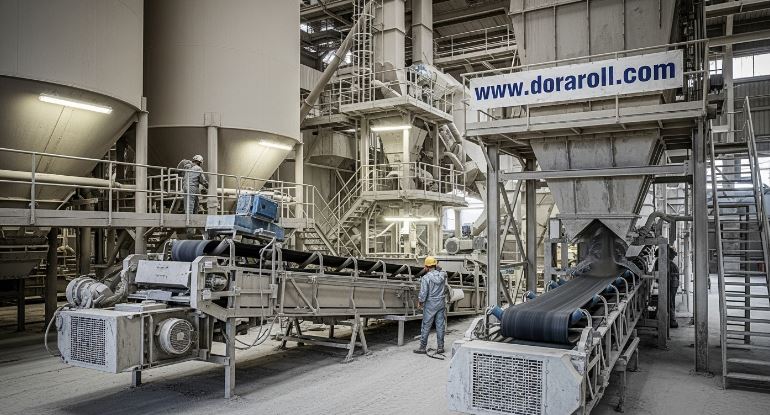
1. Structure of a Conveyor Belt System
A standard conveyor belt system consists of several key components working together for smooth operation:
- Belt: The continuous surface that carries materials, made from rubber, PVC, PU, fabric, or metal mesh.
- Pulleys (Drive and Idler): Drive pulleys move the belt, while idlers maintain tension and direction.
- Rollers: Support and guide the belt to minimize friction and wear.
- Frame: The supporting steel structure that holds all components.
- Motor & Drive Unit: Supply the mechanical power needed to move the belt.
2. Main Types of Conveyor Belts
Different industries use different belt types depending on load, environment, and application:
- Flat Belt Conveyor: Common in factories and logistics for light to medium loads.
- Modular Plastic Belt: Durable, easy to clean — perfect for food and pharmaceutical use.
- Cleated Belt: Features vertical cleats to prevent material rollback on inclines.
- Steel Cord Belt: High-strength type used in mining and heavy-duty transport.
- Trough or Roller Bed Conveyor: Suitable for bulk materials such as coal or grain.
3. Technical Specifications
Several parameters define a conveyor belt’s performance and selection criteria:
| Parameter | Description |
|---|---|
| Belt Width | Typically 300 mm – 2400 mm depending on material volume. |
| Belt Speed | Ranges from 0.3 m/s for light duty to 6 m/s for mining use. |
| Tensile Strength | Measured in N/mm, defines load capacity and stretch resistance. |
| Temperature Range | –10 °C to +80 °C standard; special belts up to 200 °C. |
| Trough Angle | Commonly 20°–45° for bulk handling systems. |
4. Advantages of Using Conveyor Belts
- Continuous, automatic material transport
- Reduced labor costs and improved workplace safety
- Higher productivity and consistent material flow
- Flexible layout for horizontal, inclined, or curved systems
- Customizable for heavy-duty or hygienic operations
5. Common Industrial Applications
- Mining & Quarrying: Transport of ores, coal, and aggregates
- Manufacturing: Assembly lines and packaging systems
- Food Industry: Hygienic transport of edible goods
- Logistics & Warehousing: Automated sorting and distribution
- Airports & Postal Systems: Baggage and parcel handling
6. Maintenance and Service Life
Regular inspection and maintenance ensure long-term reliability:
- Check tension and alignment weekly
- Clean belt surface to remove residue buildup
- Replace worn rollers or idlers
- Lubricate bearings and moving parts
- Monitor tracking to prevent edge wear
7. Future Trends
Modern systems increasingly feature smart sensors and IoT monitoring to track speed, temperature, and wear in real time. Eco-friendly materials and energy-efficient drives are also shaping the future of conveyor technology.
Conclusion
A conveyor belt is a vital part of modern material-handling systems. Understanding its structure, types, and specifications helps engineers and plant managers choose the most efficient and durable solution. With high-quality manufacturing and proper maintenance, Doraroll conveyor belts ensure reliable, safe, and cost-effective operation across industries.