
What Is a Ball Bearing? A Complete Technical and Practical Guide
Ball bearings are among the most widely used mechanical components in the world. From electric motors and conveyor systems to automobiles and household appliances, these small but crucial parts reduce friction and make motion more efficient and smooth. This article explains what ball bearings are, how they work, their main types, and key factors to consider when selecting the right bearing for your application.
1. What Is a Ball Bearing?
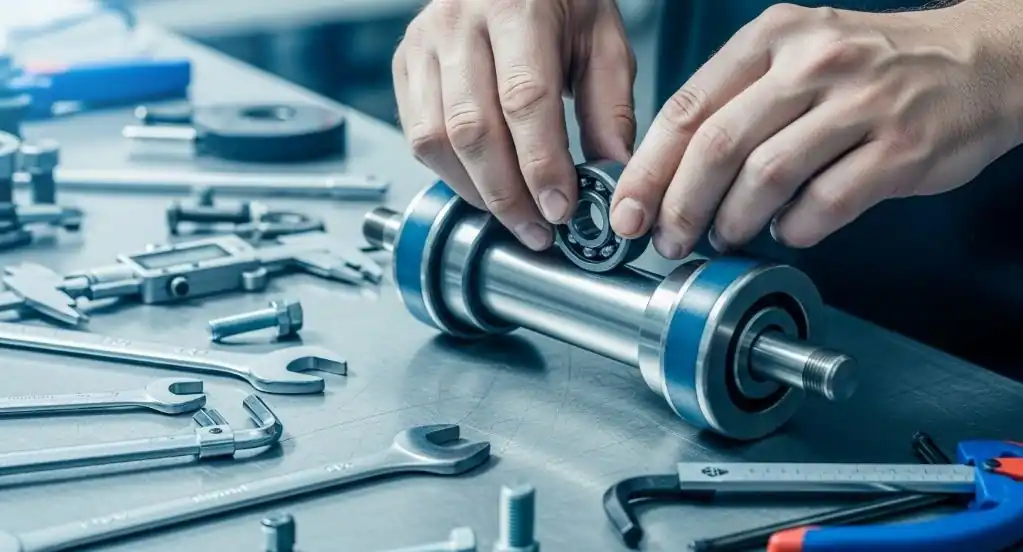
A ball bearing is a type of rolling-element bearing that uses balls to maintain the separation between the bearing races. Its main purpose is to reduce rotational friction and support both radial and axial loads. The primary parts of a ball bearing are:
- Inner ring: Mounted on the rotating shaft.
- Outer ring: Fixed to the bearing housing.
- Balls: Roll between the rings and reduce friction.
- Cage (retainer): Keeps the balls evenly spaced.
By transforming sliding friction into rolling friction, ball bearings minimize heat generation and wear, increasing machine efficiency and lifespan.
2. How Does a Ball Bearing Work?
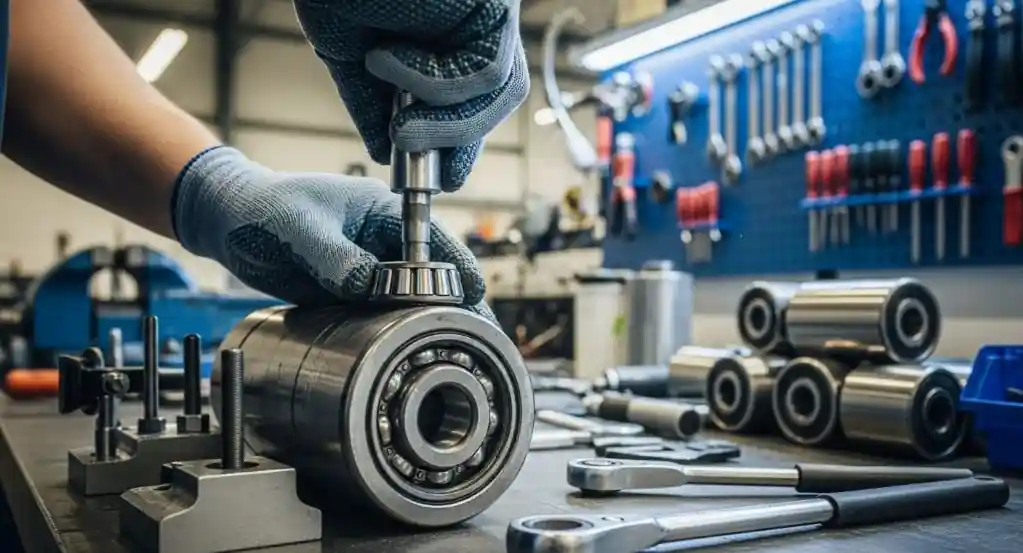
When the shaft rotates, the balls roll between the inner and outer rings. The contact area between each ball and ring is extremely small, which minimizes friction. As a result, the shaft can rotate freely with minimal energy loss and vibration.
Ball bearings are designed to handle the following types of loads:
- Radial loads: Acting perpendicular to the shaft.
- Axial loads: Acting parallel to the shaft.
- Combined loads: A mix of both radial and axial forces.
3. Types of Ball Bearings
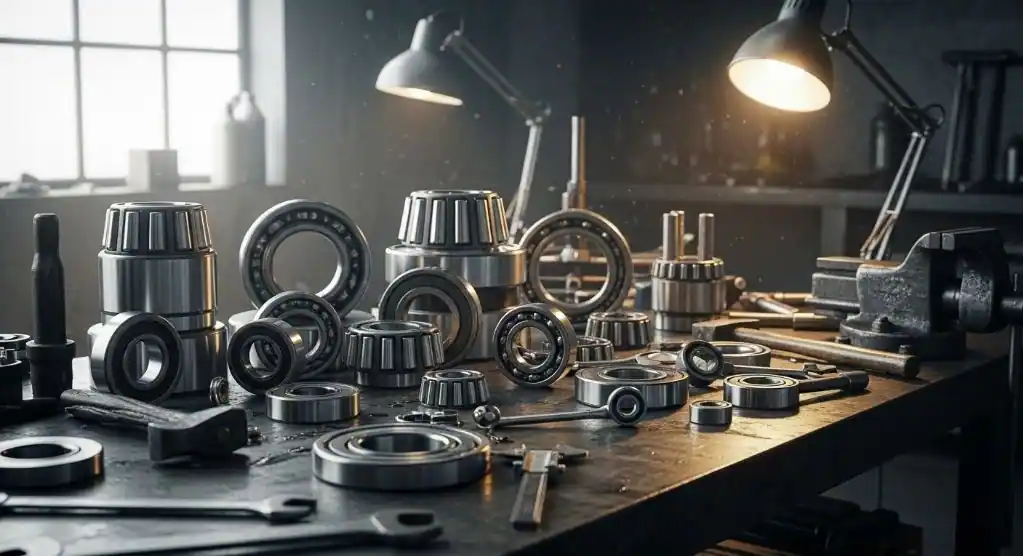
▪ Deep Groove Ball Bearings
The most common and versatile type, capable of handling both radial and moderate axial loads. Known for low friction and high-speed performance.
▪ Angular Contact Ball Bearings
Designed to support combined loads, with higher axial load capacity in one direction. Commonly used in pumps, motors, and high-speed machinery.
▪ Self-Aligning Ball Bearings
Feature two rows of balls and a spherical outer raceway, allowing them to compensate for misalignment and shaft deflection.
▪ Thrust Ball Bearings
Specially designed to carry axial loads only, suitable for low-speed applications such as turntables and vertical shafts.
▪ Miniature and Precision Ball Bearings
Used in compact, high-accuracy systems like robotics, medical devices, and measuring instruments.
4. Advantages of Ball Bearings
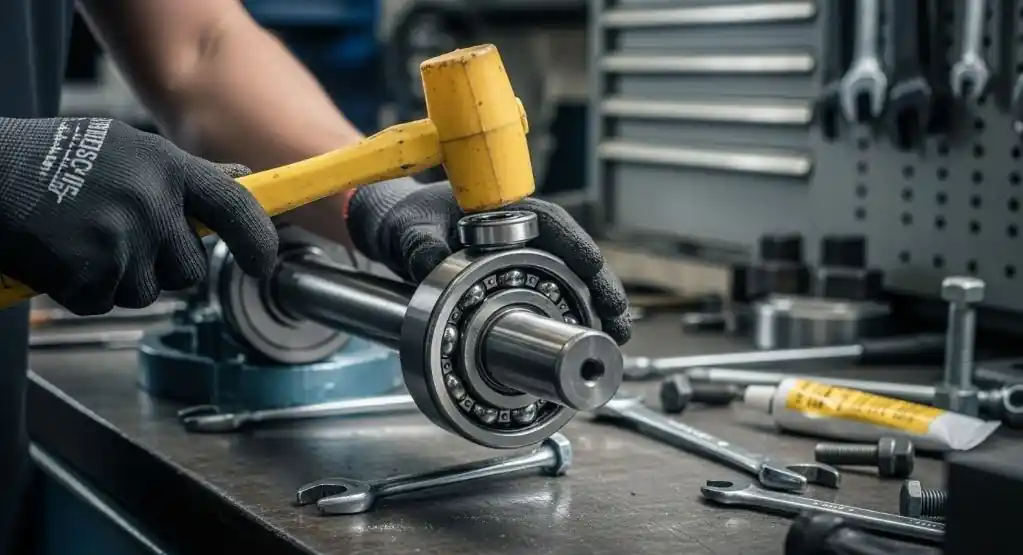
- Low friction and energy loss.
- Capable of high rotational speeds.
- Long service life and reliability.
- Compact structure and easy installation.
- Available in steel, stainless steel, and ceramic materials.
5. Common Applications of Ball Bearings
Ball bearings are found in almost every rotating system. Major applications include:
- Automotive systems (wheel hubs, alternators, transmissions)
- Industrial machinery and conveyor systems
- Electric motors, fans, and pumps
- Aerospace and railway components
- Household and hand tools
6. How to Choose the Right Ball Bearing
Choosing the right bearing depends on several technical factors:
- Load and speed: Select the bearing size according to expected load and RPM.
- Operating environment: In dusty or humid areas, sealed bearings are recommended.
- Lubrication: Proper lubrication greatly extends bearing life.
- Precision: Use high-accuracy bearings for precision machinery and instruments.
Conclusion
Ball bearings are essential components in modern machinery. They reduce friction, improve performance, and carry heavy loads with minimal wear. With the correct selection and proper maintenance, a ball bearing can significantly enhance system efficiency and reliability. In both industry and daily life, ball bearings truly keep the world turning.